 Fraunhofer USA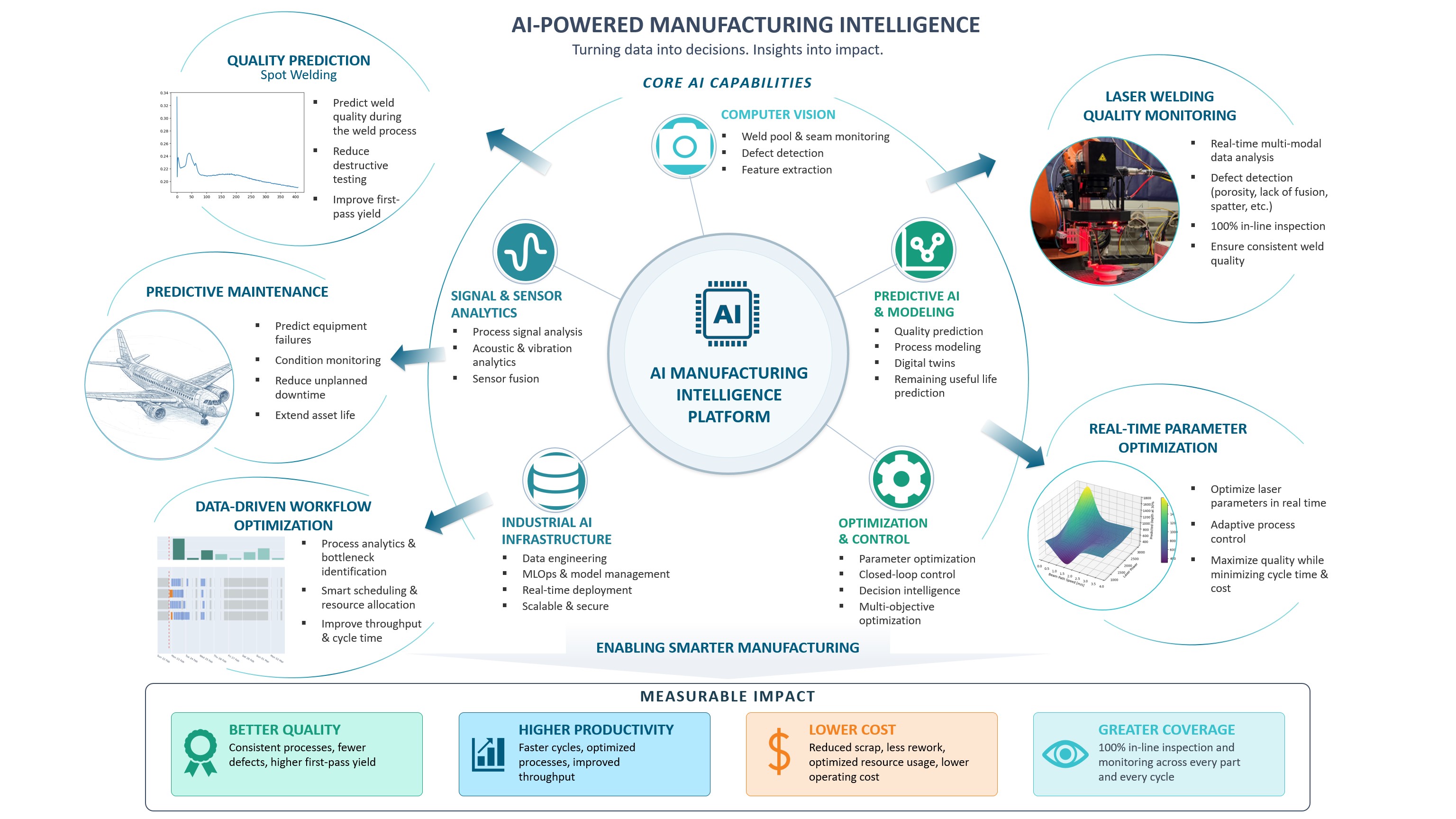
Artificial Intelligence
AI-Powered Manufacturing Intelligence
Turn your manufacturing data into better decisions.
Fraunhofer USA develops AI solutions that combine machine learning, computer vision, sensor fusion, and optimization to monitor manufacturing processes, predict product quality, optimize process parameters, and detect equipment issues before they become costly failures.
Our AI Manufacturing Intelligence Platform integrates data from cameras, sensors, acoustic measurements, machine controls, and production systems to deliver real-time intelligence directly at the point of production. Instead of relying on sampling or post-process inspection, manufacturers gain continuous visibility into every part and every process.
Applications include:
- Quality prediction
- In-line process monitoring
- Real-time parameter optimization
- Predictive maintenance
- Production workflow optimization
Built on a modular architecture, our solutions integrate with existing manufacturing equipment and scale across products, processes, and production lines.
The result: Better quality, higher productivity, lower manufacturing costs, and greater process coverage through 100% in-line monitoring.
Case Study: AI-Based Laser Welding Quality Monitoring in Battery Manufacturing
In-Line Welding Inspection - Reducing Manufacturing Costs Through Fraunhofer USA‘s AI Solutions
Why inspect samples when you can inspect every weld?
Detect hidden defects before they become costly failures. Our AI-based monitoring enables 100% in-line inspection. Identify defects in real time before defective products are fabricated or shipped.
Maximize the potential of your manufacturing line with our multidisciplinary manufacturing AI expertise:
- Smart Process Monitoring: Continuous, multi-sensor AI monitoring using visual, acoustic, and process data.
- In-Line Quality Intelligence: Instant, actionable, quality decisions on the production line.
- Scalable Manufacturing AI: Custom, adaptable solutions that scale across processes and production lines.
Benefits & Proven ROI
- Instant Detection: Identify defects in milliseconds
- Better Coverage: Catch hidden and subsurface defects that manual inspection misses
- Lower Costs: Reduce labor, inspection time, and material scrap
- Proven Impact: In a recent automotive project, our AI system reduced inspection time by 50% with ROI in under 12 months
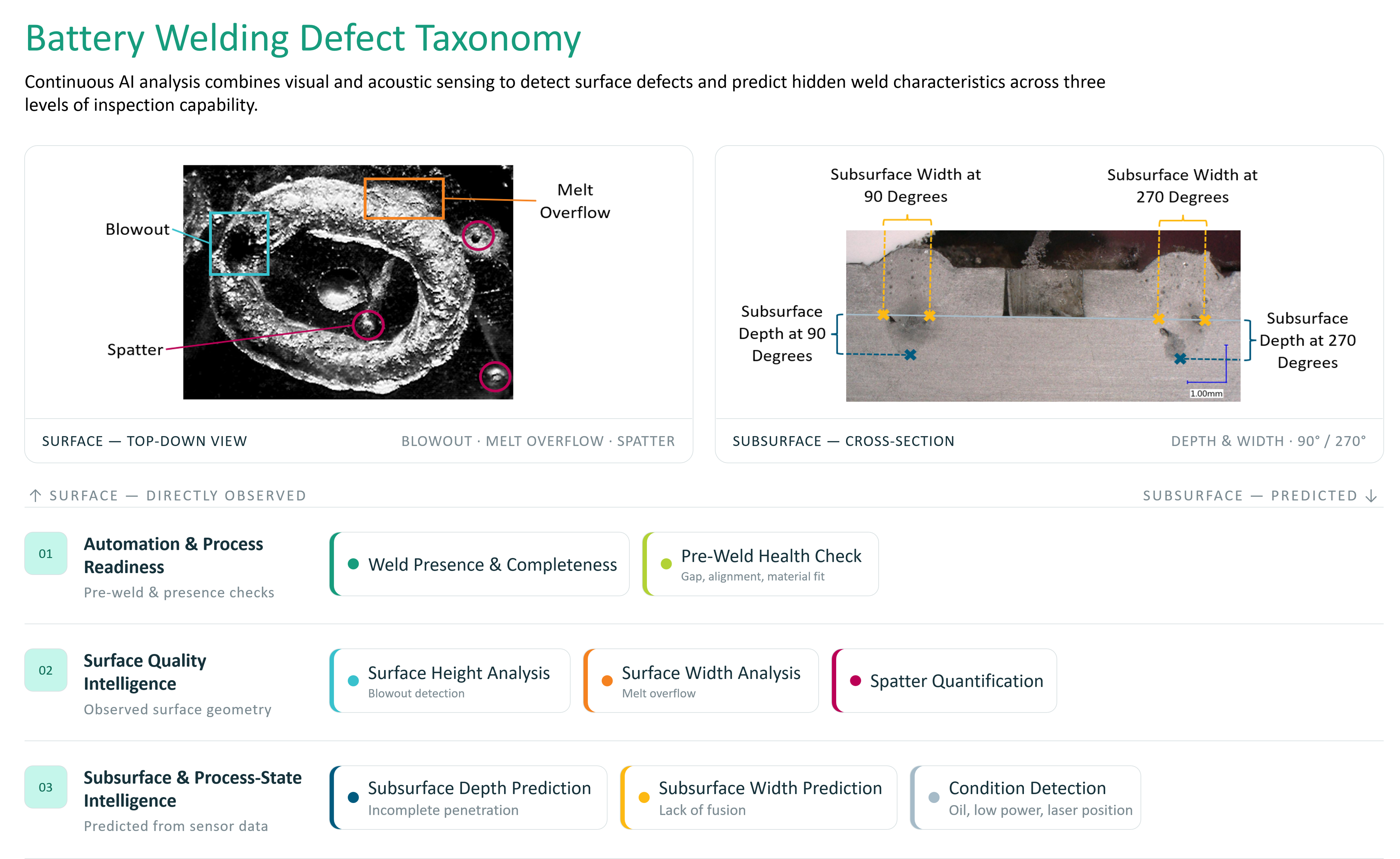
Feature Overview of Developed Software for AI-based Quality Monitoring
Our modular AI platform guides users from sensor setup and data acquisition to AI-powered quality assessment and inspection results. Explore the key software components that enable in-line monitoring, defect detection, and actionable quality insights.
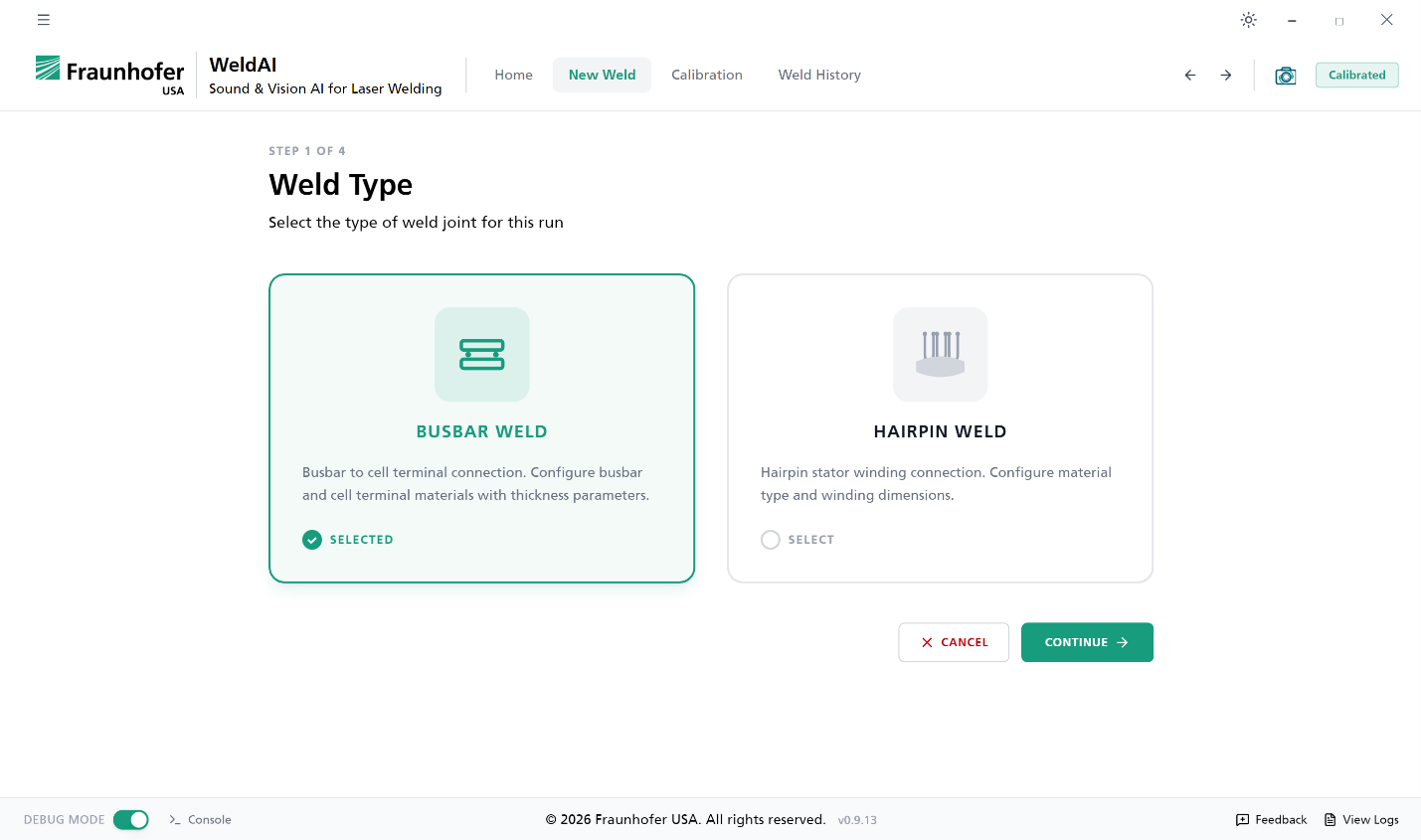
Step 1 – Weld Type Selection
- Application-Specific Setup – The system currently supports Busbar a Hairpin weld configurations for different manufacturing use cases.
- Dedicated AI Models – Provides optimized models and parameters tailored to each weld type.
- Automatic Configuration – Applies the appropriate quality monitoring workflow based on weld type selection.
- Modular Architecture – Enables integration of new weld types and manufacturing applications can be integrated with minimal effort as requirements evolve.
Step 2 – Run Configuration
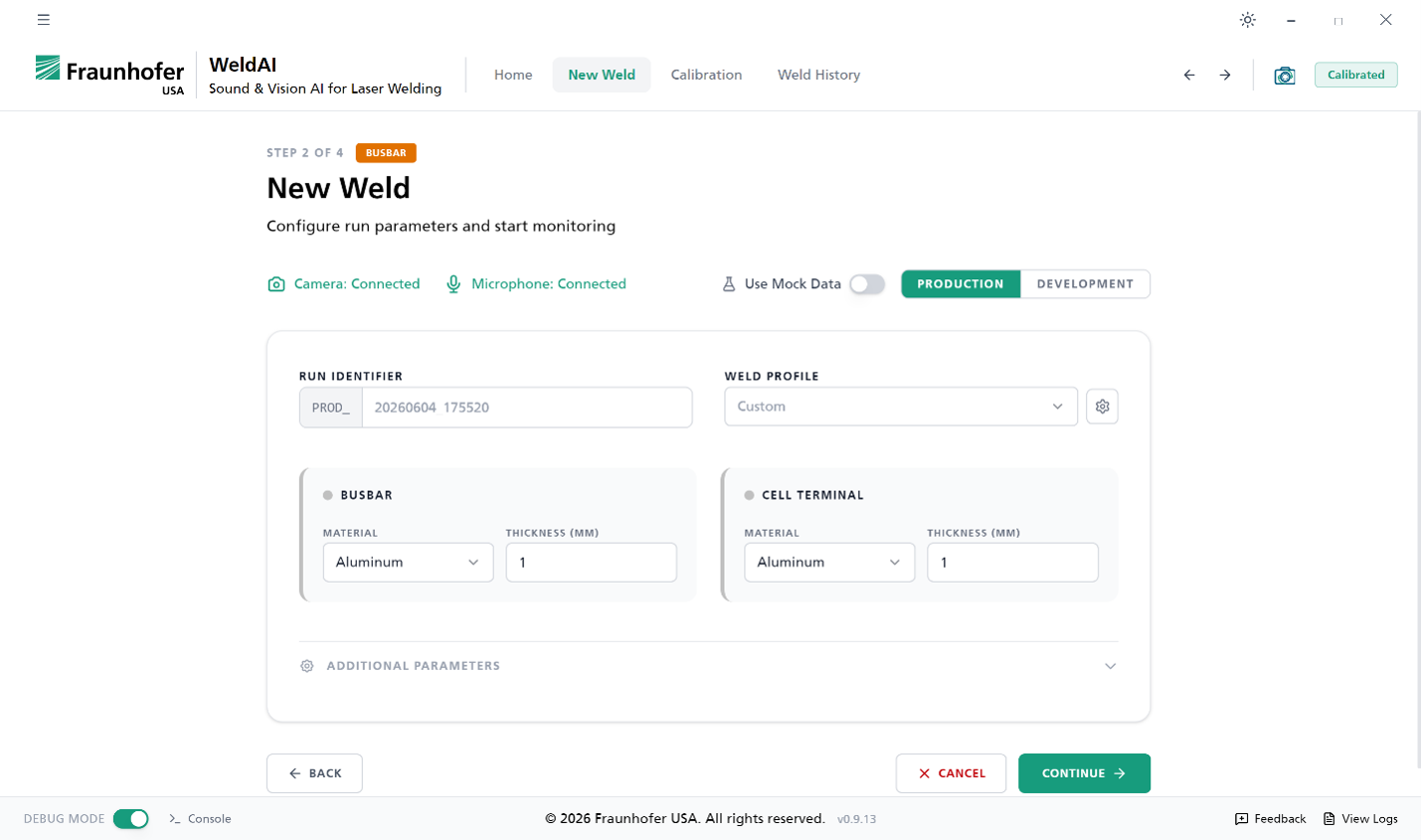
- Production Traceability – Assigns a unique Run Identifier to track and document each production run.
- Flexible Weld Profiles – Allows selection from predefined process configurations or creation of a custom setup tailored to the application.
- Material-Specific Configuration – Enables to specify material configuration for the selected weld type.
- Automatic Model Selection – Applies the appropriate AI models and signal processing pipeline automatically.
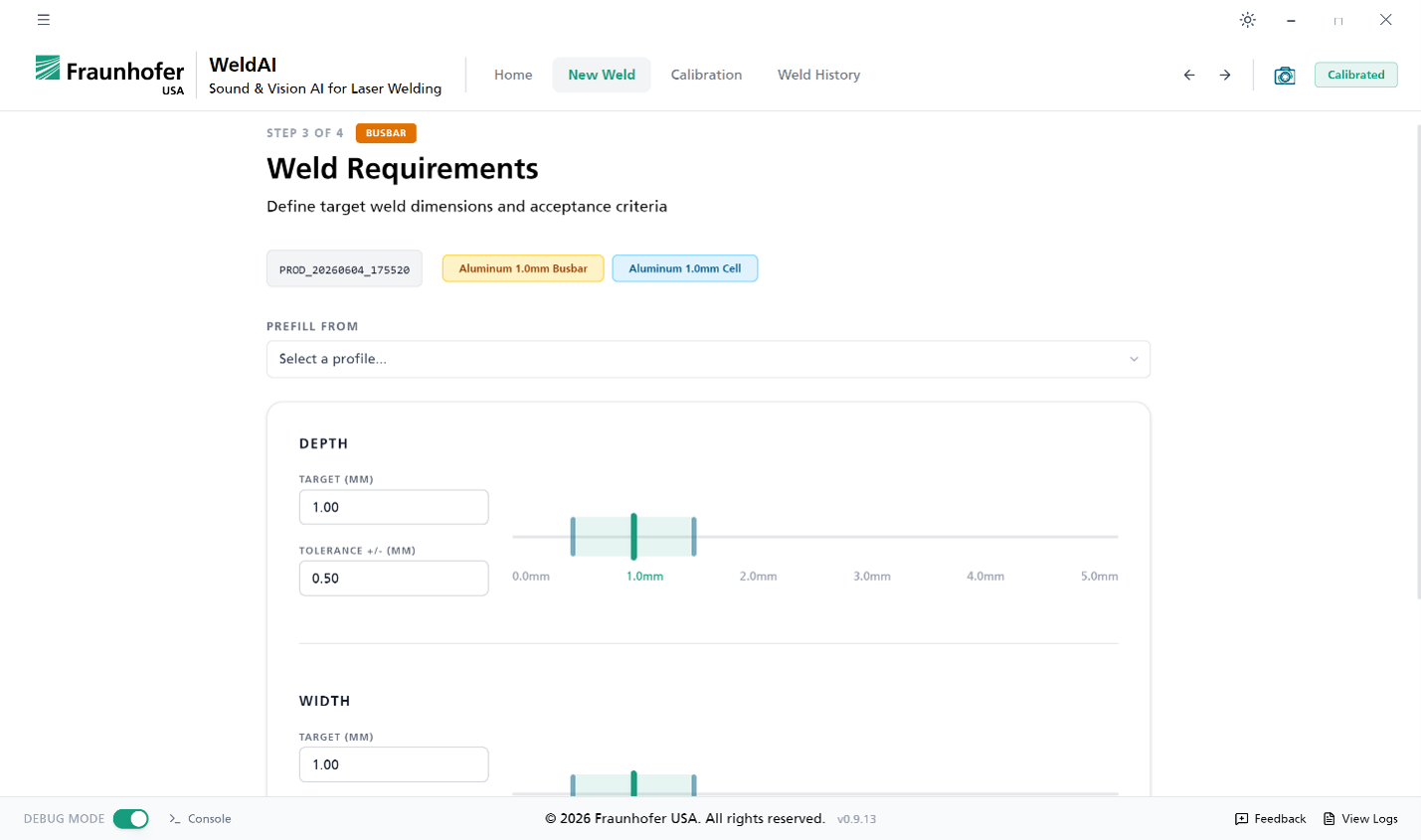
Step 3 – Weld Requirements
- Configurable Quality Targets – Allows to define key weld quality metrics (e.g. subsurface depth and width for battery welding applications).
- Adjustable Thresholds & Tolerances – Enables configuration of acceptance limits for each quality metric to match process requirements.
Step 4 – Pre-Weld Check
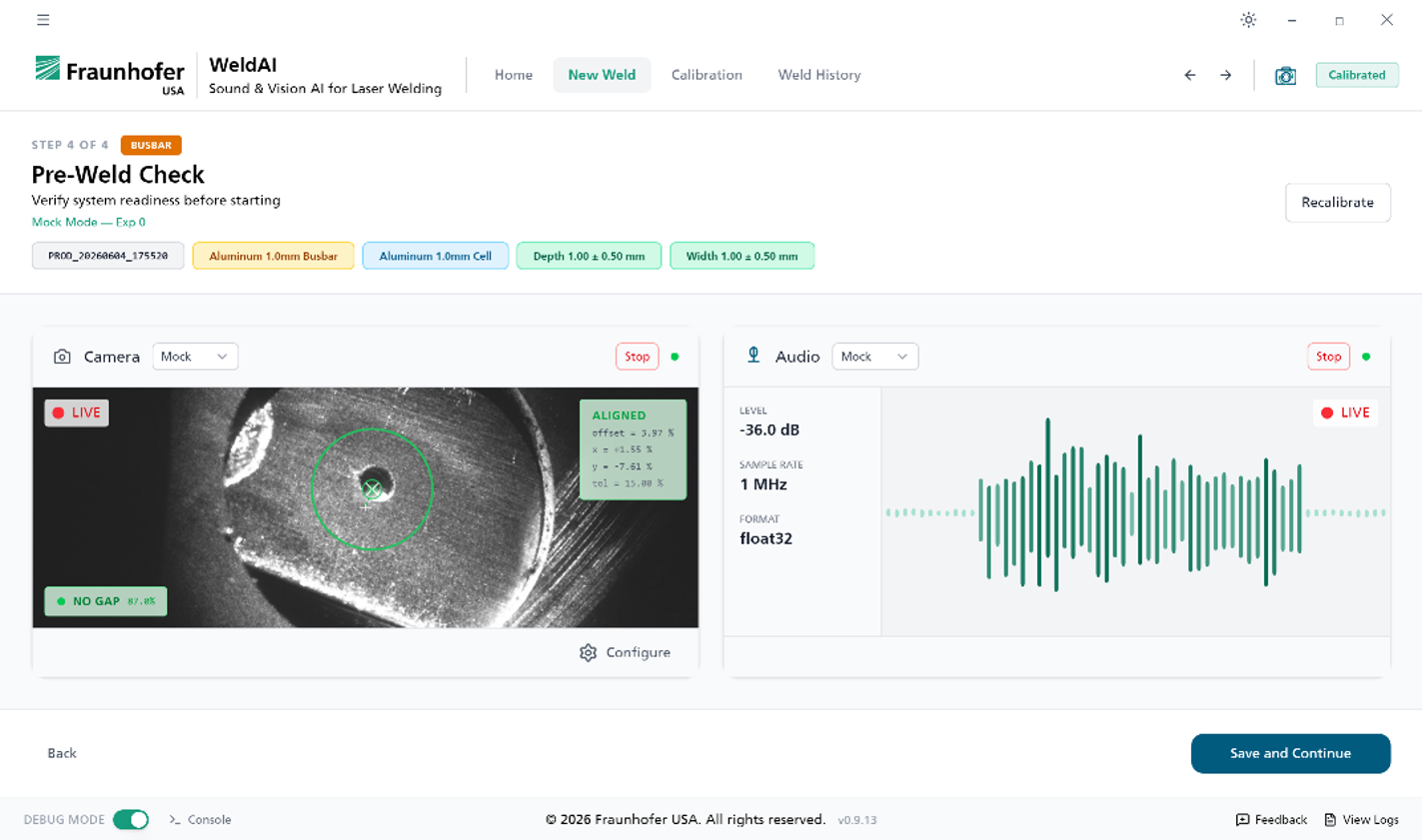
- Sensor & System Verification – Confirms that all monitoring components, including the camera and microphone, are active and ready for data acquisition.
- Automatic Alignment Validation – Detects weld position and verify material alignment within tolerance.
- Gap Detection & Setup Inspection – Checks for gaps between the busbar and cell terminal that could negatively impact weld quality.
- Live Process Visualization – Enables real-time camera and audio monitoring access for setup verification.
- Recalibration Support – Provides rapid recalibration option if adjustments to the physical setup are required before welding.
Step 5 – AI Quality Monitoring
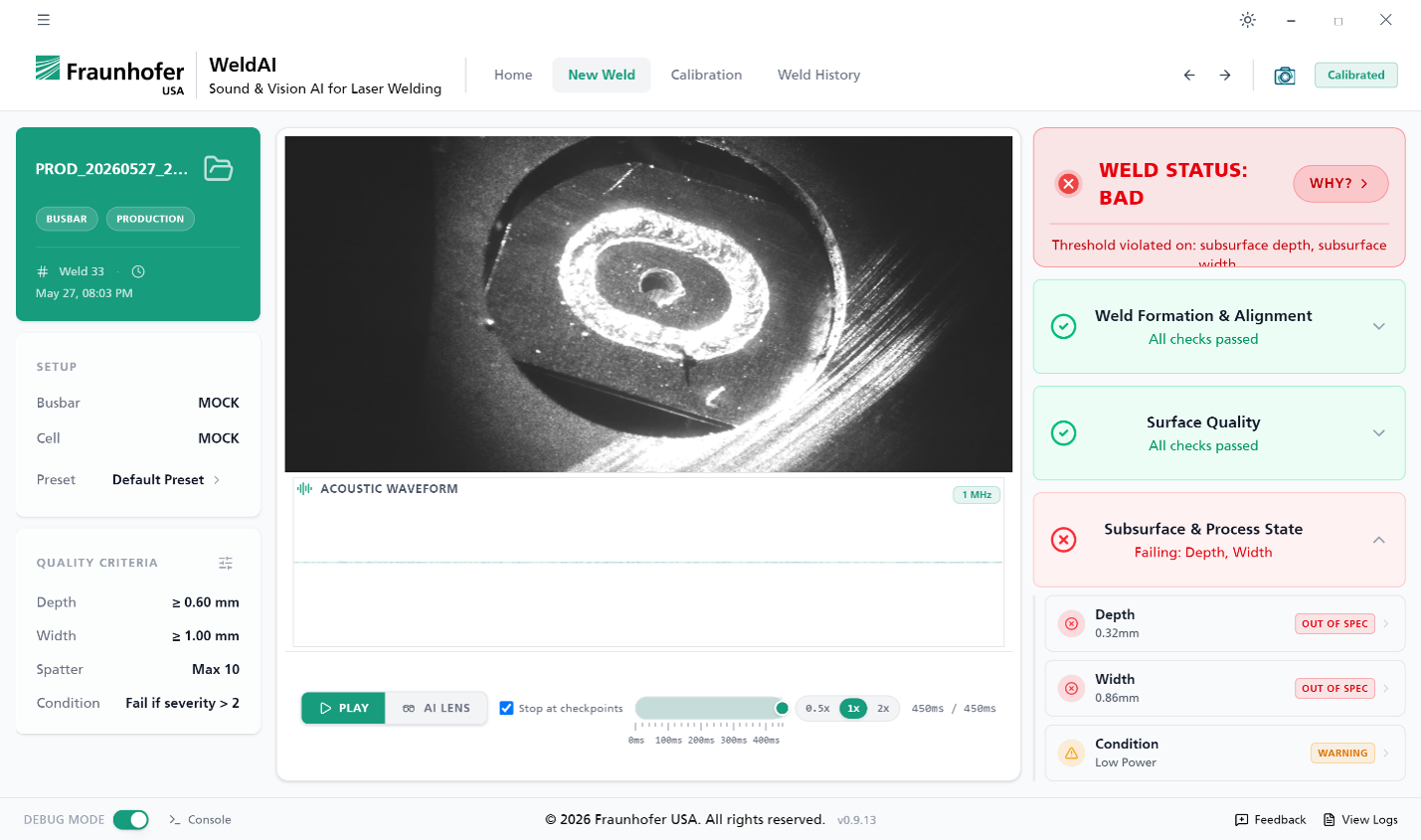
- Three result categories:
- Weld Formation & Alignment – Confirms weld presence, weld seam completeness without missing sections, and post-weld alignment within tolerance.
- Surface Quality – Evaluates visible defects such as spatter and blowout against configured limits.
- Subsurface & Process State – Infers subsurface characteristics and process anomalies by analyzing image and audio data during welding, detecting defects such as incomplete fusion, insufficient weld penetration, oil contamination, reduced laser power, and incorrect laser head positioning.
- Automated Quality Classification – Aggregates all category outputs to classify each weld as Good, Bad, or Repairable.
- Configurable Decision Logic – Allows users to define thresholds, tolerances, and classification rules for how quality decisions are derived.
- Three result categories:


